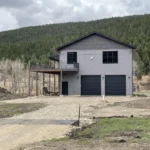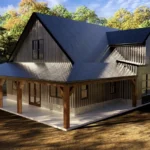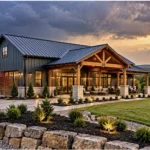
How much land do you need for a barndominium in Tennessee? There is no single number. The building itself takes up surprisingly little space. What really sets the minimum is everything around it: the septic system, setbacks, wells, driveways, slope, zoning and how you plan to use the property. This guide explains each factor, what Tennessee rules say about lot size and how to check a piece of land before you buy it.
How Much Land Do You Need for a Barndominium? The Short Answer
Tennessee does not set one statewide minimum lot size for a barndominium. The land you need is the land required for the building, a working septic system with a reserve area, any well, required setbacks, access and the outdoor uses you want.
On a property served by public sewer and water inside a town, that can be a fairly small lot. On rural land with septic and a well, the soil and the septic layout usually decide how much space the home really needs. Zoning and county rules then add their own requirements on top.
Start With the Building Footprint
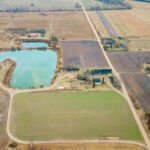
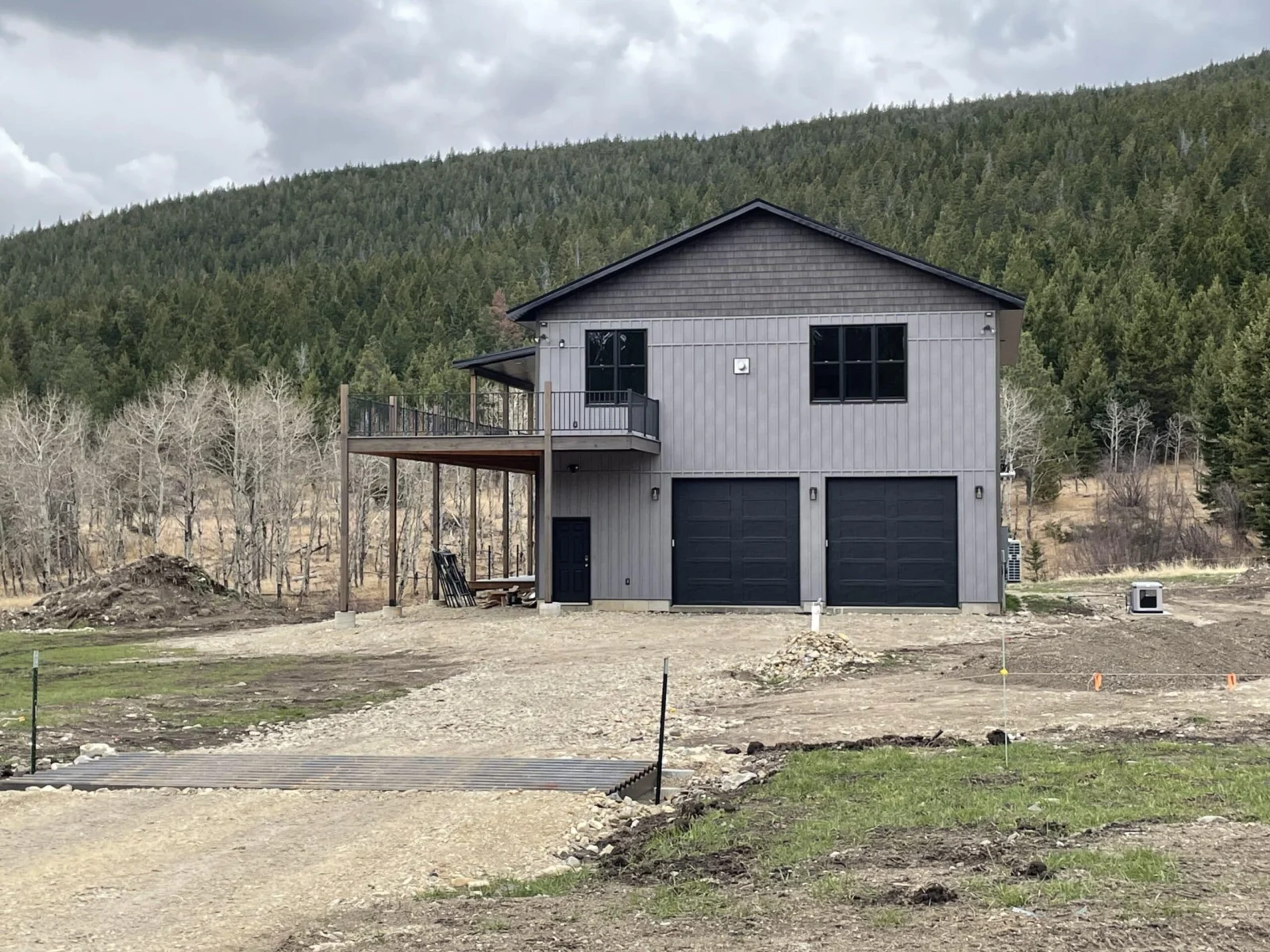
The barndominium itself is often the smallest part of the equation. One acre is 43,560 square feet. A 40 by 60 foot barndominium covers 2,400 square feet, which is only around 5 to 6 percent of an acre.
The footprint grows when you add:
- An attached shop or garage
- Covered porches and patios
- Detached outbuildings, barns or RV storage
- A turnaround for trucks or trailers
Even with those additions, the structures rarely take up most of the land. The space around them does.
Septic Is Often the Biggest Space Requirement in Tennessee
Most rural Tennessee barndominiums use a septic system, and septic is often what sets the real minimum lot size. Tennessee rules require a lot to be large enough for the original septic system and an area set aside to duplicate it if the first one fails.
The size of the drain field depends on the soil and the number of bedrooms. For conventional systems, the state rules set a minimum of 370 square feet of trench bottom per bedroom, and poorer soils need more area or an alternative system. A site evaluation decides what the land can support.
Because the septic result can change where the house goes, it is worth understanding septic approval in Tennessee before you make an offer on rural land.
Setbacks, Wells and Buildable Area
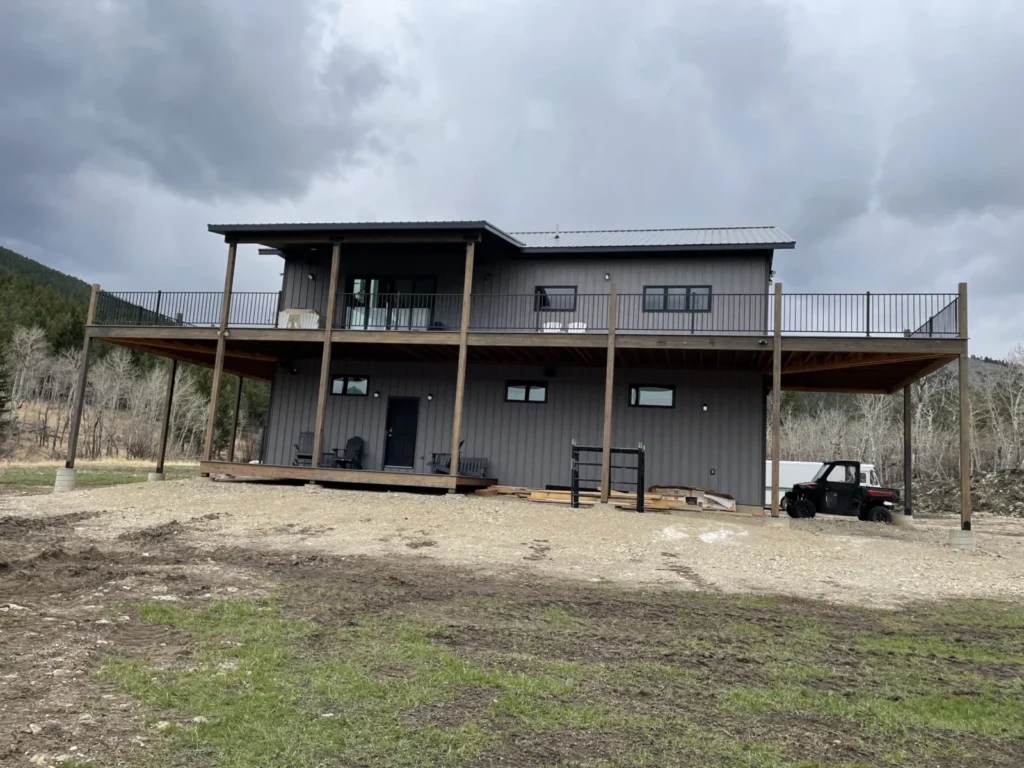
Not every part of a property is usable. Several things reduce the buildable area:
- Setbacks from property lines and roads set by local zoning
- Required separation between wells, septic fields and the house
- Steep slopes that are costly or impractical to build on
- Floodplains and low-lying ground
- Utility easements and access easements
- Creeks, wetlands and drainage paths
A five-acre parcel with a steep hillside, a creek and a flood zone can have less buildable ground than a flat two-acre lot. That is why the usable area matters more than the total acreage on the listing.
Zoning and County Minimum Lot Sizes
Zoning is set locally in Tennessee, so minimum lot sizes, setbacks and allowed uses vary by county and city. Some rural counties have little zoning outside towns, while growing counties may set minimum lot sizes, frontage requirements and design rules for new homes.
Agricultural zoning, residential zoning and any city limits or planning regions around a property can all change what is allowed. Our guide to Tennessee county, city and rural building rules explains how these layers affect a barndominium project.
Private restrictions matter too. Deed restrictions and subdivision covenants can set minimum home sizes, ban metal exteriors or limit outbuildings, even where zoning would allow them.
What Is the 5 Acre Rule in Tennessee?
The “5 acre rule” usually refers to how Tennessee law defines a subdivision. Under state law, dividing land into lots of less than five acres for sale or building, or any division that needs a new street or utility construction, generally counts as a subdivision and has to follow local subdivision regulations.
Dividing land into parcels of five acres or more, without new roads or utility construction, is generally outside that definition. In practice, that is why many rural Tennessee land sales are split into tracts of five acres or more.
Local rules can be stricter. Some counties add requirements such as road frontage or access conditions before a five-acre split is exempt, so check with the local planning commission before relying on it.
Not sure how much of your land is buildable?
Greenbelt and Agricultural Land
Some buyers want enough land to qualify for Tennessee’s greenbelt program, which can lower property taxes on farm, forest and open space land. The rules depend on the type of land:
- Forest land: generally requires a tract of at least 15 acres.
- Open space land: has a lower threshold of 3 acres.
- Agricultural land: is judged on acreage, productivity and actual farm use.
The county assessor of property decides whether land qualifies, so confirm the current requirements with them before buying land with greenbelt in mind.
Driveways, Access and Utilities
Access takes up more land than many buyers expect. A long driveway needs room for construction traffic, drainage and a turnaround. If the land is set back from the road, power, water and phone or internet lines have to reach the building site as well.
Choosing a building spot deep in the property for privacy can mean a longer driveway and utility runs. Choosing one closer to the road saves cost but may give up views or space.
How Your Plans Change the Land You Need
The right amount of land depends on how you want to live on it. Think about:
- Whether you need a large shop, equipment storage or RV parking
- Horses, livestock, gardens or a small farm
- Future additions, a guest house or a second building
- Privacy from neighbors and the road
- Room for kids, outdoor living and parking
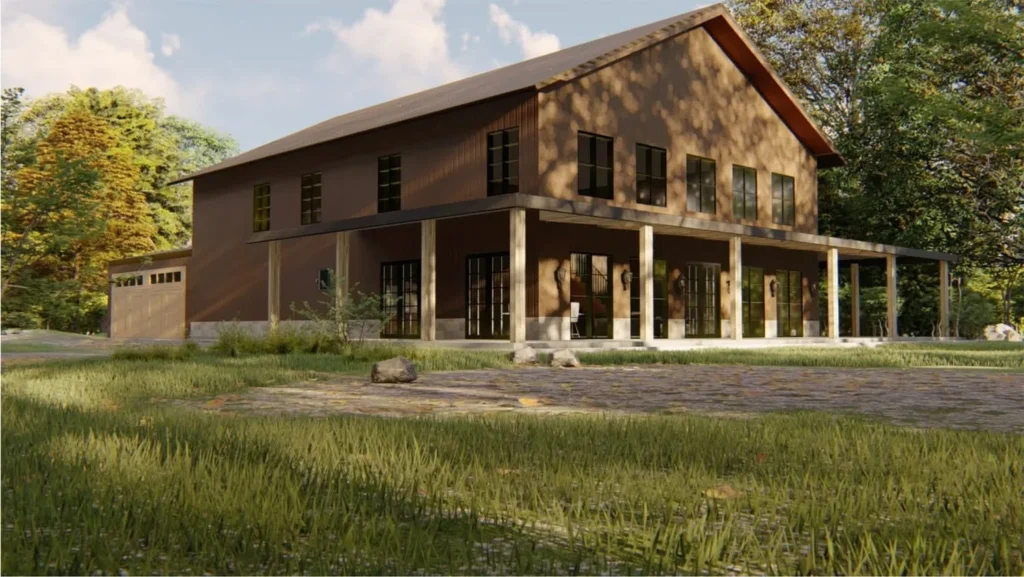
The layout of the home also matters, since a wide single-story plan with an attached shop covers more ground than a compact two-story design. Comparing barndominium floor plans for Tennessee against a site plan early helps you see how much of the land the building will actually use.
How the Same Barndominium Fits Different Tennessee Lots
The same home can need very different amounts of land depending on where it sits. Three common situations show why.
A Lot With Public Sewer and Water
When a property connects to public sewer and water, there is no drain field or well to fit on the land. The limits come mainly from zoning setbacks, minimum lot sizes and any subdivision rules, so a barndominium can work on a smaller lot here than anywhere else.
A Rural Lot With Septic and a Well
On rural land, the septic field, its reserve area and the well all need space, along with the required separation between them. Soil quality makes a big difference: good soils need less drain field, while poor soils need more area or an alternative system. Two lots of the same size can support very different layouts.
A Sloped or Wooded Parcel
Hilly and wooded land often looks large on paper but has a limited area that is flat enough to build on and suitable for septic. Clearing, grading and driveway work also take up ground. On these parcels, it is common to need more total acreage to get a workable homesite.
Regional Differences Across Tennessee
East Tennessee: mountainous and rolling land can leave less buildable area on a given parcel, so slope and access matter.
Middle Tennessee: rolling land and growing counties mean zoning and lot size rules deserve close attention.
West Tennessee: flatter land is easier to build on, but floodplains and drainage can limit where the home goes.
Want us to check a Tennessee property before you buy?
Common Land Mistakes Barndominium Buyers Make
Buying on Acreage Alone
Total acres say little about buildable area. Slope, septic soils, flood zones and easements can shrink the usable space considerably.
Skipping the Septic Check
Land that cannot support a septic system cannot support a home. A soil evaluation should come before closing, not after.
Ignoring Deed Restrictions
Covenants can block metal exteriors or outbuildings even on large rural parcels.
Assuming the 5 Acre Rule Applies Everywhere
Local regulations can add conditions, so confirm with the planning commission first.
How to Check Land Before You Buy
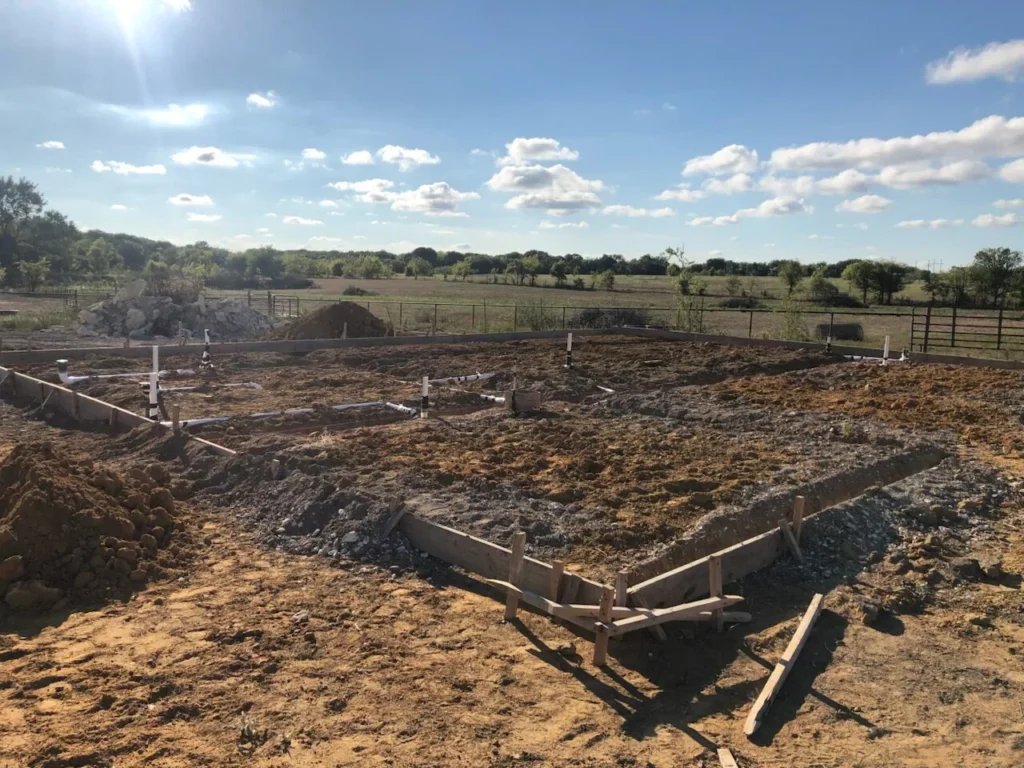
The safest approach is to evaluate the land for a specific barndominium before closing. That means confirming zoning, septic suitability, access, utilities, flood zones and buildable area together. Our Tennessee barndominium land checklist walks through the items to confirm before construction starts.
If you would rather have a builder review the property with you, land selection and site evaluation support in Tennessee can help you compare parcels and spot problems before you commit.
Conclusion
There is no fixed amount of land required for a barndominium in Tennessee. The building itself needs very little space. The real minimum comes from septic and its reserve area, setbacks, wells, slope, access and local zoning, plus the way you want to use the property. The 5 acre rule affects how land is divided, not how big a homesite must be.
Check the usable area, septic suitability and local rules before you buy, and the right amount of land becomes clear.
Frequently Asked Questions
How many acres do you need for a barndominium?
There is no set number of acres. A barndominium on public sewer can fit on a small lot, while a rural home with septic and a well needs enough land for the drain field, a reserve area, setbacks and access. Local zoning may also set a minimum lot size.
Can you build a barndominium on 1 acre in Tennessee?
Often, yes, if the soil supports a septic system and local zoning allows it. The septic system and its reserve area, plus setbacks and a well if needed, have to fit on the lot. A site evaluation and a check with the county confirm whether a specific acre works.
What is the 5 acre rule in Tennessee?
It refers to the state definition of a subdivision. Dividing land into lots under five acres, or any split needing a new street or utilities, generally counts as a subdivision under local regulations. Parcels of five acres or more without new roads or utilities are generally outside that definition, though local rules can be stricter.
Does septic decide lot size in Tennessee?
Often, yes. Tennessee rules require room for the original septic system and a duplicate area, and the drain field size depends on soil and bedrooms. On rural land, that requirement frequently sets the practical minimum lot size.
How much land do you need for greenbelt in Tennessee?
It depends on the classification. Forest land generally needs at least 15 acres and open space land at least 3 acres. Agricultural land is judged on acreage, productivity and farm use, so check with your county assessor.