Barndominium insurance is one of the questions Tennessee buyers raise most often, usually after hearing that some insurers will not write a policy for a metal home. The reality is more nuanced. Many barndominiums are insured as standard homes, but the process can take more preparation than insuring a typical house. This guide explains why some insurers hesitate, what a policy should cover in Tennessee, which risks need separate coverage, and how to prepare so the process goes smoothly from construction through move-in.
Can You Get Insurance for a Barndominium in Tennessee?
Yes. Barndominiums that are built as permanent, permitted residences can be insured with homeowners coverage. The difference is that not every insurer has experience with them, and some underwriting systems are built around conventional wood-framed homes.
Buyers who run into trouble usually face one of these situations:
- The insurer classifies the building as agricultural or commercial rather than residential
- The replacement cost tool does not have a category that fits steel or post-frame construction
- The property is rural with limited fire protection
- The building combines living space with a large shop or business use
- The home is still under construction or was owner-finished without clear records
Insurance in Tennessee is regulated by the Tennessee Department of Commerce and Insurance, but coverage decisions and pricing are set by each insurer. That is why one company may decline a barndominium while another writes it without difficulty.
Why Some Insurers Hesitate to Cover Barndominiums
Unfamiliar Construction
Insurers price risk using data. When a home type is less common, underwriters may have less claims history to work from, and some respond by declining or adding restrictions. Clear documentation of how the home was built helps close that gap.
Replacement Cost Estimates
Homeowners policies are based on the cost to rebuild, not the market value. Estimating tools designed for conventional houses can undervalue or overvalue a barndominium because steel framing, metal panels and large open spans do not match standard templates. An inaccurate estimate can leave a home underinsured.
Mixed Residential and Shop Use
Large attached shops, equipment storage or a home-based business can raise questions about whether the building is primarily a residence. If part of the building is used commercially, the insurer may require additional coverage or a separate business policy.
Rural Fire Protection
Many Tennessee barndominiums are built on rural land. Distance to the nearest fire station and access to hydrants or water supply can affect both eligibility and price, regardless of how the home is built.
Choosing the site well can help with this. Support with barndominium land in Tennessee during the buying stage lets you consider road access, fire service coverage and flood exposure before you commit to a property.
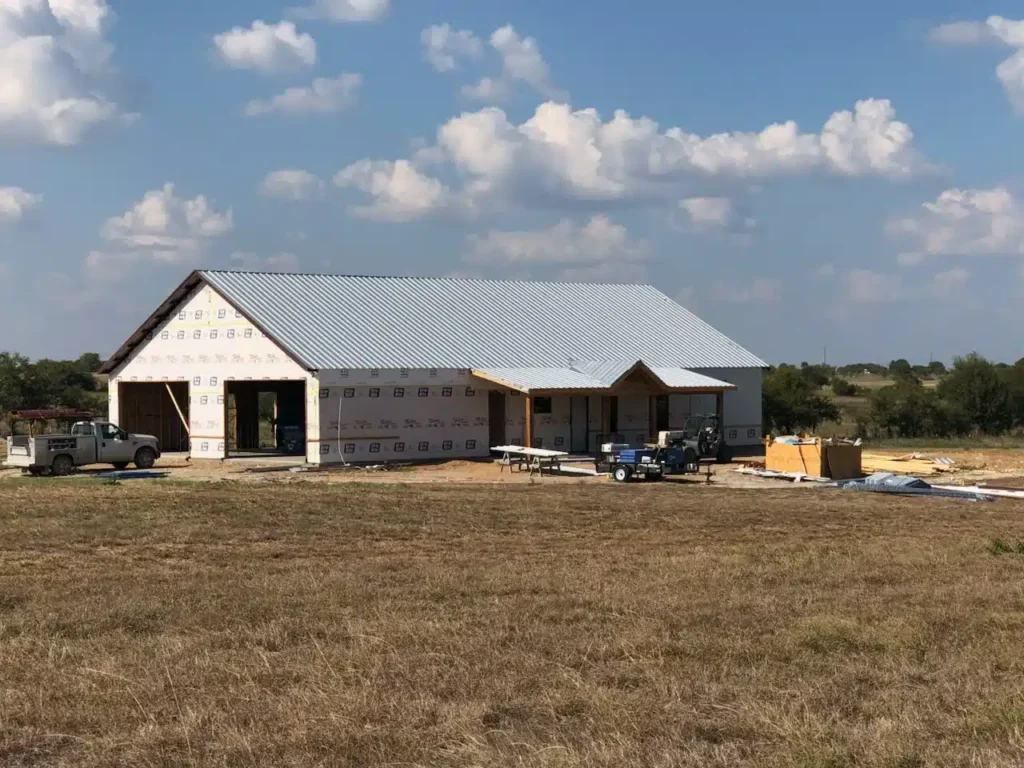
Insurance During Construction: Builder’s Risk
A homeowners policy usually starts once the home is complete and occupied. During construction, the project needs builder’s risk coverage, which protects the structure and materials against risks such as fire, wind, theft and vandalism while the building goes up.
Key points about builder’s risk include:
- It may be purchased by the builder or the owner, depending on the contract
- Construction lenders commonly require it before releasing funds
- Coverage limits should reflect the full completed value of the build
- Theft of materials and tools on rural job sites is a real exposure
- The policy should transition cleanly to homeowners coverage at completion
Insurance and lending are closely linked. Planning barndominium financing in Tennessee alongside insurance helps avoid delays, because lenders typically want proof of builder’s risk during construction and homeowners coverage before converting to a permanent loan.
Planning to build a barndominium in Tennessee?
What a Tennessee Barndominium Policy Should Cover
Most barndominiums are insured with the same core coverages as any home. Review each part carefully, since a metal home with an attached shop can stretch standard limits.
- Dwelling coverage: the cost to rebuild the home itself.
- Other structures: detached shops, barns, fences and outbuildings.
- Personal property: furniture, belongings and household contents.
- Loss of use: extra living costs if the home cannot be lived in after a covered loss.
- Personal liability: injuries or damage you are legally responsible for.
- Medical payments: minor injuries to guests on your property.
Replacement Cost vs Actual Cash Value
Replacement cost coverage pays to repair or rebuild with similar materials without deducting for age. Actual cash value pays the depreciated value, which can leave a large gap after a roof or siding claim. Confirm which applies to the dwelling, the roof and personal property.
Shops, Equipment and Tools
Tools, equipment and vehicles kept in a barndominium shop may exceed standard personal property limits or be excluded if used for business. Ask how the insurer treats the shop area, and whether you need a scheduled item, a farm policy or a business policy.
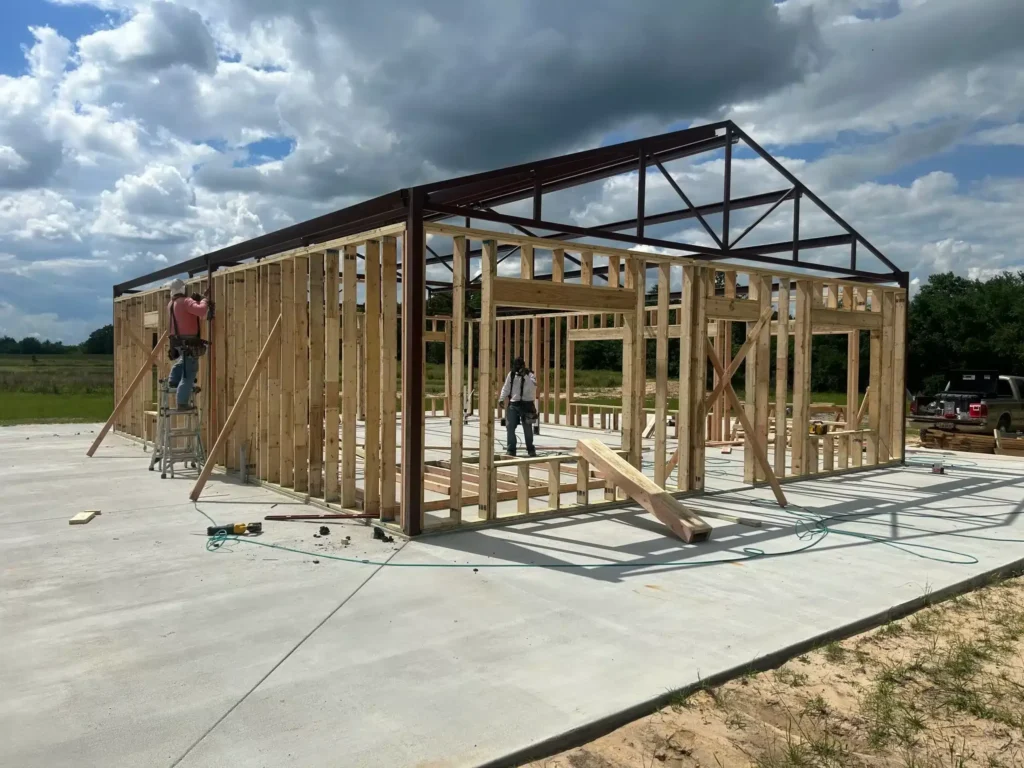
Tornado, Wind and Hail Coverage in Tennessee
Tennessee sees tornadoes and severe thunderstorms across all three regions of the state. Windstorm and hail are generally covered under standard homeowners policies, but the details matter.
- Wind and hail deductibles: some policies use a separate deductible, sometimes set as a percentage of the dwelling limit rather than a flat dollar amount.
- Cosmetic damage exclusions: some policies exclude dents to metal roofs and siding that do not cause leaks or functional damage.
- Roof age and condition: may affect whether a roof claim is paid at replacement cost or depreciated value.
The way the home is built also affects risk. Experienced metal home builders in Tennessee design frame connections, anchorage and roof attachment for the applicable wind loads, and some insurers consider impact-rated roofing, such as panels with a UL 2218 Class 4 rating, when assessing hail risk.
Middle Tennessee has a long history of tornado activity. Owners working with barndominium builders in Middle Tennessee often plan a storm shelter or safe room during design, which improves safety and may be worth raising with an insurer.
Flood Insurance for Tennessee Barndominiums
Standard homeowners policies do not cover flood damage. Flood coverage is purchased separately, either through the National Flood Insurance Program (NFIP) or a private flood insurer.
Flood risk in Tennessee is not limited to river bottoms. Heavy rainfall, creeks, low-lying fields and poor drainage can all cause flooding outside mapped high-risk zones. If the property is in a FEMA Special Flood Hazard Area and has a federally backed mortgage, flood insurance is typically required.
Site choice and building height make a real difference. The guide to how floodplains and low-lying land affect barndominiums explains how flood zones, finished floor elevation and drainage influence both construction and flood insurance cost.
An elevation certificate, prepared by a licensed surveyor, documents how high the building sits relative to expected flood levels. For homes in or near flood zones, it can be important for accurate flood insurance pricing.
Earthquake Coverage and the New Madrid Seismic Zone
Standard homeowners policies also exclude earthquake damage. This matters most in West Tennessee, which sits near the New Madrid Seismic Zone, one of the most significant seismic areas in the central United States.
Earthquake coverage is usually added as an endorsement or a separate policy, often with its own deductible. Owners in and around Memphis and the western counties should ask whether it is available and what it costs.
For buyers planning a build near the Mississippi River, working with barndominium builders in Memphis, TN who understand local soil, flood and seismic conditions helps when you later explain the home’s construction to an insurer.
Across West Tennessee, flood, tornado and earthquake exposure can overlap on the same property. Reviewing all three together gives a clearer picture of total insurance cost than looking at the homeowners premium alone.
What Affects Barndominium Insurance Cost
Barndominium insurance cost is set by the same broad factors as any home, plus a few that are more specific to metal construction and rural sites:
- Replacement cost of the dwelling and other structures
- Location, including tornado, hail, flood and earthquake exposure
- Distance to fire protection and water supply
- Roof type, rating and age
- Size and use of any shop or business area
- Deductible choices, including separate wind and hail deductibles
- Claims history and credit-based insurance factors where permitted
- Safety features such as monitored alarms, storm shelters and fire suppression
Because these factors vary so much, the most reliable number comes from quotes based on the actual building, site and coverage choices. Compare quotes on equal coverage, not only on premium.
How to Prepare Before You Shop for Coverage
Good documentation makes it much easier for an underwriter to understand and approve a barndominium. Gather these before you request quotes:
- Construction drawings and engineered plans
- Building permits and final inspection or certificate of occupancy
- Square footage of living space and shop space, listed separately
- Details of the frame, roof panel type and roof rating
- Electrical, plumbing and HVAC information
- Photos of the exterior, interior and any safety features
- An elevation certificate if the property is near a flood zone
Permits and inspections carry particular weight because they show the building was constructed and approved as a residence. The guide to Tennessee barndominium permits and inspections explains what is typically checked and why those records matter after construction.
Need build records your insurer will ask for?
Questions to Ask an Insurance Agent
- Do you insure barndominiums as standard homes, and how do you classify them?
- How will you calculate replacement cost for steel or post-frame construction?
- Is the roof covered at replacement cost or actual cash value?
- Is there a cosmetic damage exclusion for metal roofing or siding?
- Is there a separate wind and hail deductible, and how is it calculated?
- How is the attached shop treated, and are my tools and equipment covered?
- What flood and earthquake options are available for this property?
- Can builder’s risk coverage convert to homeowners coverage at completion?
Independent agents who work with several insurers can often compare more options for a barndominium than a single-company agent.
Insurance, Financing and Resale
Insurance affects more than monthly costs. Lenders require proof of coverage, and buyers in the future will need to insure the home too. A barndominium that is permitted, documented and built to residential standards is easier to insure, finance and sell.
That is why insurance often comes up alongside lending questions. The guide on whether you can finance a barndominium in Tennessee covers how lenders view barndominiums and what they typically require, which overlaps closely with what insurers want to see.
Common Barndominium Insurance Mistakes
Underinsuring the Dwelling
Using market value or a low estimate instead of true replacement cost can leave a gap after a major loss.
Assuming Flood Is Covered
Flood is excluded from standard homeowners policies and must be purchased separately.
Overlooking the Shop
Tools, equipment and business use may not be covered under standard personal property limits.
Ignoring Roof Terms
Cosmetic damage exclusions and actual cash value roof settlements can significantly reduce a hail claim payout.
Waiting Until Move-In
Coverage should be arranged before construction starts, with builder’s risk in place during the build and homeowners coverage ready at completion.
Building with experienced barndominium builders in Tennessee makes these steps easier, because engineered plans, permits, inspections and construction records are produced as part of the project rather than pieced together afterward.
Conclusion
Insuring a Tennessee barndominium is very achievable when the home is built as a permitted residence and documented properly. Expect some insurers to be unfamiliar with metal construction, and focus on accurate replacement cost, clear roof terms and proper treatment of any shop area. Arrange builder’s risk during construction, add flood coverage where needed, and consider earthquake coverage in West Tennessee. With the right documents and an agent who understands barndominiums, coverage becomes a routine part of the build rather than a last-minute obstacle.
Frequently Asked Questions
Why don’t some insurance companies cover barndominiums?
Some insurers have limited experience with steel or post-frame homes, so their underwriting and replacement cost tools do not fit the construction well. Others are cautious about mixed living and shop use or rural fire protection. Many insurers do cover barndominiums, so shopping with an experienced agent usually helps.
Is barndominium insurance more expensive than regular home insurance?
Not necessarily. Cost depends on replacement value, location, fire protection, roof type and coverage choices rather than the word barndominium alone. Some owners pay similar premiums to a conventional home, while rural location, large shops or high storm exposure can raise the price.
Does homeowners insurance cover tornado damage to a barndominium in Tennessee?
Windstorm damage, including tornadoes, is generally covered under standard homeowners policies. Check whether the policy has a separate wind and hail deductible and whether cosmetic damage to metal roofing or siding is excluded, since both affect what a claim pays.
Do I need flood insurance for a barndominium in Tennessee?
Flood is not covered by standard homeowners insurance. If the property is in a FEMA high-risk flood zone with a federally backed mortgage, flood insurance is typically required. Even outside those zones, heavy rain and low-lying land make flood coverage worth considering.
What insurance do I need while my barndominium is being built?
During construction, the project usually needs builder’s risk insurance to protect the structure and materials against risks such as fire, wind and theft. Construction lenders commonly require it. Confirm whether you or the builder will carry the policy and how it transitions to homeowners coverage at completion.