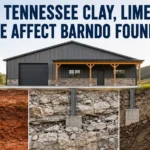
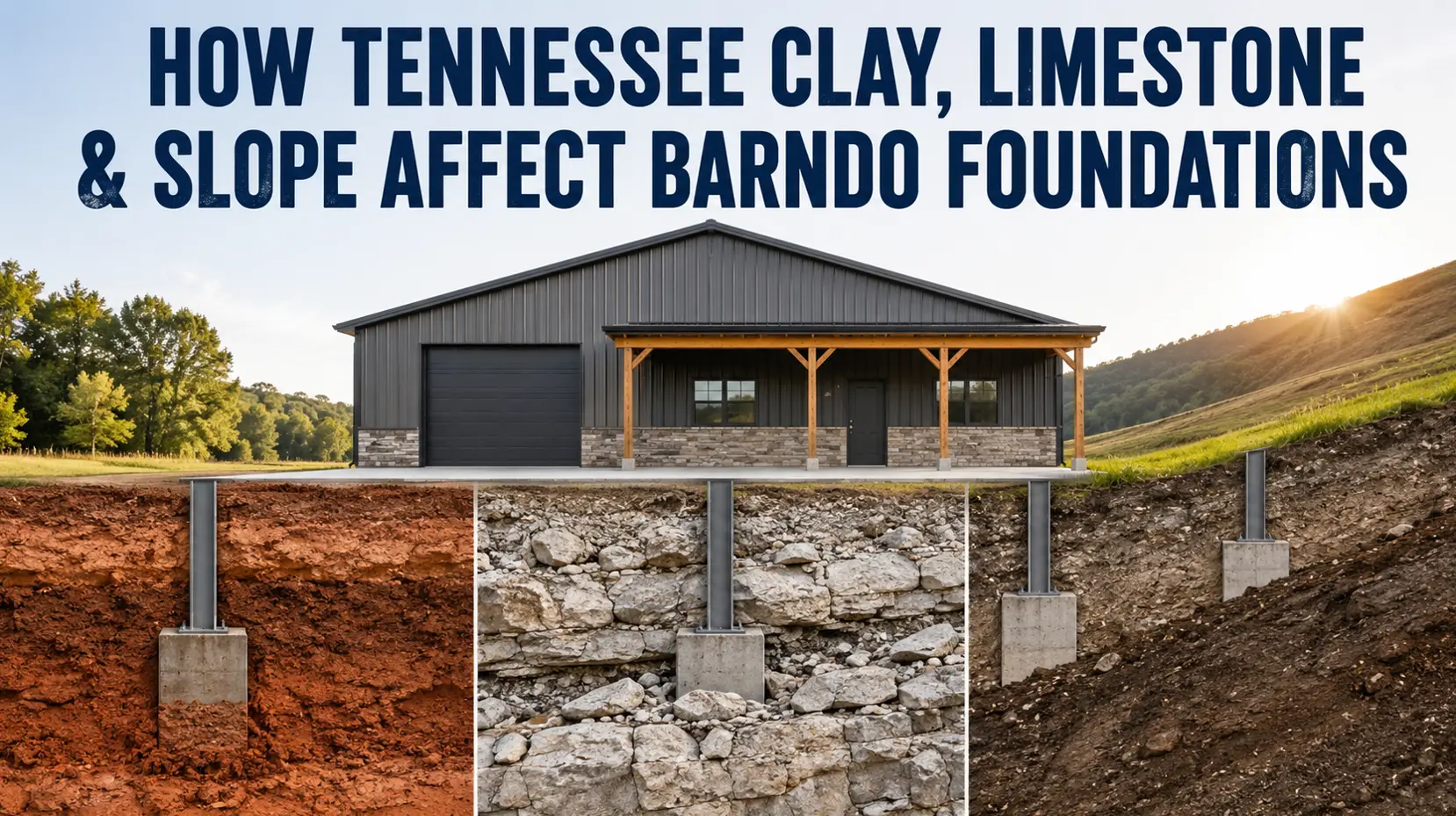
Tennessee’s ground conditions change dramatically from one county to the next, and that variation has a direct effect on how a barndominium foundation needs to be engineered. Expansive clay dominates the west, limestone and karst terrain run through the Nashville Basin, exposed rock covers much of the east, and hillside lots appear in nearly every region. A foundation that performs well in one part of the state can fail within a few years in another if the soil and slope were never properly assessed.
This guide explains how clay, limestone, rock, and sloped terrain each affect barndominium foundations, and what to evaluate before construction begins.
TL;DR
- A geotechnical soil report and topographic survey before purchase prevent most foundation problems
- West Tennessee’s clay soils expand and shrink with moisture, requiring deeper footings or reinforced slabs
- Middle Tennessee sits on limestone karst terrain with hidden sinkholes, sometimes needing specialized footings or piers
- East Tennessee often hits shallow bedrock, making excavation the main cost driver rather than soil strength
- Sloped lots call for stem walls, stepped foundations, or walkout basements depending on the grade
Why Tennessee’s Ground Conditions Shape Foundation Design
Tennessee spans three distinct geological regions, and each one behaves differently under the weight of a structure. West Tennessee sits on soft, clay-rich soils left behind by the Mississippi River delta. Middle Tennessee rests on limestone bedrock that has been dissolving and shifting for millions of years. East Tennessee mixes rocky ridgelines with steep, forested terrain. A barndominium foundation designed for one of these regions rarely transfers directly to another without changes.
What makes building a barndominium in Tennessee different from other states often comes down to exactly this variation. A builder working across the whole state has to treat every site as its own engineering problem, not a repeat of the last job down the road.
Clay Soil and Foundation Movement in West and Middle Tennessee
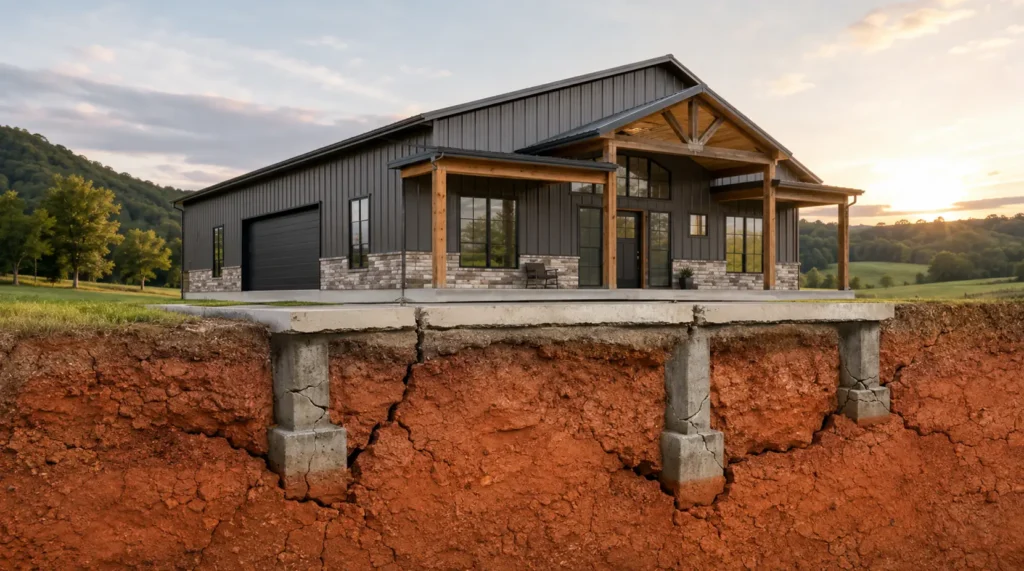
Clay soil is one of the most common foundation challenges in Tennessee, especially across the flatter terrain of West Tennessee and pockets of Middle Tennessee. Clay absorbs water and expands, then dries out and contracts. That constant cycle of swelling and shrinking pushes and pulls at whatever sits on top of it, including a barndominium slab or footing.
A geotechnical soil report is one part of proper land selection and site evaluation support in Tennessee, and it needs to happen before a purchase closes rather than after. The report tells an engineer how much the soil is likely to move, how deep footings need to go, and whether the slab needs additional reinforcement or a different foundation system altogether.
Homeowners and builders should watch for these warning signs of clay-related foundation movement:
- Cracks in a slab or foundation wall that widen after wet or dry seasons
- Doors and windows that stick or no longer latch properly
- Floors that develop a noticeable slope over time
- Gaps opening between exterior trim and the foundation
These issues rarely appear overnight. They build gradually as the clay beneath the structure cycles through repeated wet and dry periods, which is why engineered footings and proper site drainage matter so much in clay-heavy areas.
Limestone and Karst Terrain Across the Nashville Basin
Middle Tennessee sits on a geological formation known as the Nashville Basin, where limestone bedrock lies close to or right at the surface. Over thousands of years, slightly acidic groundwater dissolves that limestone, creating underground voids, caves, and sinkholes. This type of landscape is called karst terrain, and it is one of the more unpredictable ground conditions a builder can encounter.
Karst does not behave like ordinary soil movement. A site can look completely stable on the surface while hiding a void several feet below grade. Counties around Nashville, along with much of Davidson, Williamson, Rutherford, and Sumner counties, sit within active karst zones, and thousands of mapped sinkholes exist across this region.
Because of this, foundation design in karst areas often depends on more than a standard soil test. Engineers may recommend deeper footings, reinforced concrete beams that can span a void if one develops, or in some cases helical piers driven to stable bedrock. Local building departments in this part of the state, including many jurisdictions near Nashville, also require documentation of any known sinkholes before a permit is issued.
Wnat to talk to a qualified barndo builder in Tennessee?
Rock and Shallow Bedrock in East Tennessee
East Tennessee brings a different challenge entirely. Instead of soft clay or hidden voids, builders here often run into rock that sits just below the surface, sometimes within inches of grade. This is common throughout the Ridge and Valley region and the foothills leading into the Appalachians.
Shallow bedrock is not necessarily a problem for foundation strength. Rock provides an extremely stable base once footings are set. The real difficulty is excavation. Trenching for footings, utility lines, or a basement can require rock saws, hydraulic breakers, or in some cases blasting, which adds both time and cost to the early stages of a build.
Sites around Knoxville and the surrounding foothills frequently combine rocky ground with sloped lots, which means excavation planning and drainage design need to happen together rather than as separate steps. Skipping this coordination is one of the more expensive mistakes a project can make in this part of the state.
Building on Sloped and Hillside Terrain
Sloped land shows up across all three regions of Tennessee, from rolling pasture in Middle Tennessee to steep hillside lots in the east. Slope affects grading, drainage, excavation cost, and which foundation types are even possible on a given site.
The right foundation approach generally depends on how steep the lot actually is:
- Mild slopes can often work with a standard slab, provided grading directs water away from the structure on all sides
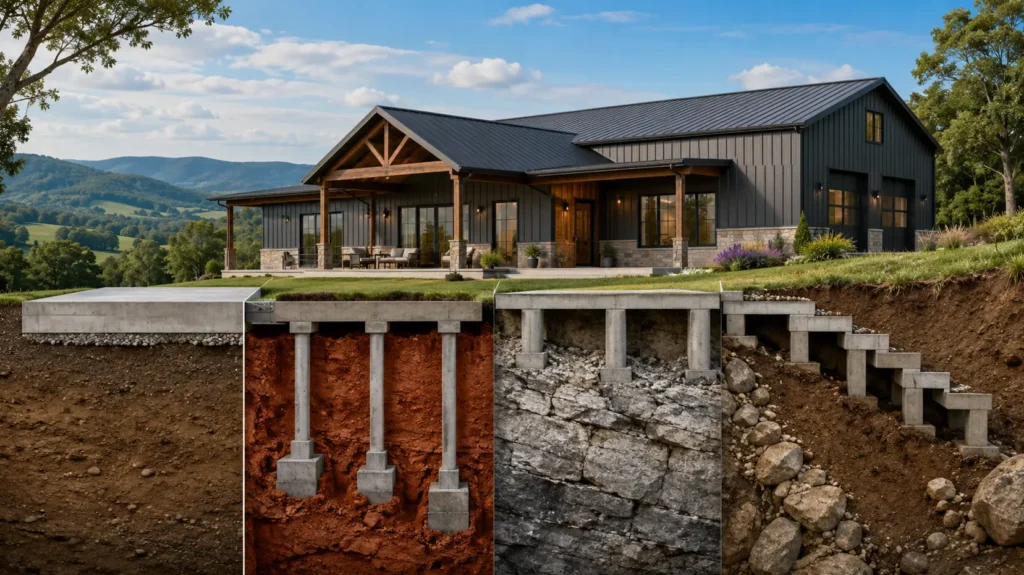
- Moderate slopes usually call for a stem wall foundation, which allows the foundation height to vary while keeping the floor level
- Steeper slopes are often better suited to a stepped foundation that follows the natural contour of the land
- Hillside lots with enough grade can support a walkout or daylight basement, turning what would otherwise be wasted slope into usable square footage
Anyone working from existing barndominium floor plans in Tennessee should expect some adjustment once the site’s actual slope is surveyed, since a layout designed for flat ground rarely transfers directly to a hillside without changes to entry points, garage placement, or floor levels.
Foundation Types Suited to Tennessee’s Varying Ground Conditions
Most barndominiums in Tennessee end up using one of three foundation systems, and the right choice depends heavily on the soil, bedrock depth, and slope discussed above.
- Concrete slab on grade: the most common option statewide, offering a durable, level floor when soil bearing capacity is adequate and reinforced properly for local conditions
- Perimeter foundation with stem walls: often specified where soil movement, mild slope, or drainage concerns make a monolithic slab less reliable on its own
- Pier and beam or post foundations: used where soil conditions, rock, or steep terrain make a full slab impractical, elevating the structure above grade
Barndo builders in Tennessee increasingly specify perimeter foundations with stem walls when clay movement or mild grading issues make a plain slab risky, since the added footing depth and stem wall height give the structure more room to absorb seasonal soil changes without cracking.
Common Foundation Mistakes on Tennessee Land
Foundation problems on barndominium projects almost always trace back to a handful of avoidable mistakes made early in the process, before the first shovel of dirt is moved.
- Skipping the geotechnical soil test to save money upfront
- Applying the same slab design to every site regardless of soil type or slope
- Ignoring surface drainage and grading around the finished foundation
- Failing to check for known sinkholes or karst features before designing footings
- Underestimating excavation cost on rocky or steeply sloped lots
Custom home builders in Tennessee generally treat these same risks the same way for barndominiums as they would for a traditional stick-built house, since the ground underneath does not change based on what kind of structure sits on top of it. A foundation mistake made in the design phase is almost always cheaper to fix on paper than after concrete is poured.
Regional Differences Across East, Middle, and West Tennessee
Putting the three regions side by side makes the differences easier to plan around. West Tennessee’s clay soils demand attention to seasonal expansion and contraction. Middle Tennessee’s karst terrain requires void detection and deeper, more rigid footings in active sinkhole zones. East Tennessee’s rock and slope combination shifts the biggest cost and planning burden toward excavation and grading rather than the foundation itself.
Barndominium builders in Middle Tennessee deal with karst-related footing decisions on a regular basis, which is part of why local experience matters as much as general construction knowledge when a site sits inside a known sinkhole zone.
Areas around Franklin sit within this same karst-heavy region, and lots here can require a site-specific geotechnical report even when neighboring properties were built without one, simply because subsurface voids do not follow property lines.
We can help you find the right land for your barndominium,
Best Practices for Site Evaluation Before You Build
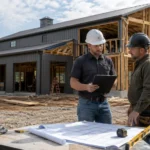
A thorough site evaluation before construction begins is the single best way to avoid foundation problems later. This holds true regardless of which region of Tennessee the land sits in.
- Order a geotechnical soil report before finalizing a land purchase, not after
- Check local records for mapped sinkholes or karst features in Middle Tennessee counties
- Get a topographic survey on any lot with visible slope or grade change
- Confirm drainage plans direct water away from the foundation on all sides
- Review local permitting requirements before finalizing the foundation design
Foundation permitting also depends on city vs county rules for buildings in Tennessee, since requirements for soil reports, setbacks, and sinkhole disclosures are not consistent from one jurisdiction to the next. What is required in one county may not apply just across the line in another.
Tennessee barndominium contractors who handle land evaluation, soil testing, and foundation engineering under one roof tend to catch these regional issues earlier, before they turn into change orders mid-build. Turnkey barndominium builders in Tennessee generally build this kind of site evaluation into the earliest phase of a project rather than treating it as a separate step handled by outside vendors.
Conclusion
Clay, limestone, rock, and slope each place different demands on a barndominium foundation, and Tennessee happens to offer all four within a single state. Understanding which conditions apply to a specific piece of land, before design work begins, is what separates a foundation built to last decades from one that starts showing problems within a few years. A proper soil test, a topographic survey, and local knowledge of regional geology go a long way toward getting the foundation right the first time.
Frequently Asked Question
Do I need a soil test before building a barndominium in Tennessee?
Yes, in most cases. A geotechnical soil test tells the engineer how much the ground can bear and how much it might move seasonally, which directly shapes footing depth and foundation type. Many lenders and local building departments require one before permitting begins, and skipping it turns foundation design into guesswork.
Can a barndominium be built on a sloped lot in Tennessee?
Yes. Mild slopes can often work with a standard slab and careful grading, while steeper lots typically call for a stem wall, stepped foundation, or walkout basement. The right approach depends on the grade percentage, which a topographic survey will confirm before design work starts.
What foundation type works best for clay soil?
A perimeter foundation with stem walls is often specified for clay-heavy sites because it gives engineers more flexibility to set footing depth below the zone where seasonal moisture causes the most movement. A standard slab can still work, but usually needs additional reinforcement and deeper footings based on the soil report.
Are sinkholes a real concern for foundations in Middle Tennessee?
Yes, particularly in the Nashville Basin, where limestone bedrock has created thousands of mapped sinkholes and underground voids. Sites in this region often need additional geophysical testing beyond a standard soil report, and some counties require documentation of known karst features before issuing a permit.
How much does site preparation add to foundation costs on difficult terrain?
It varies widely depending on whether the challenge is clay, rock, or slope. Rocky sites that require trenching equipment or blasting can add meaningfully to early site costs, while sloped lots add expense through grading and retaining work. A site evaluation before purchase gives a much clearer cost picture than estimating after the fact.