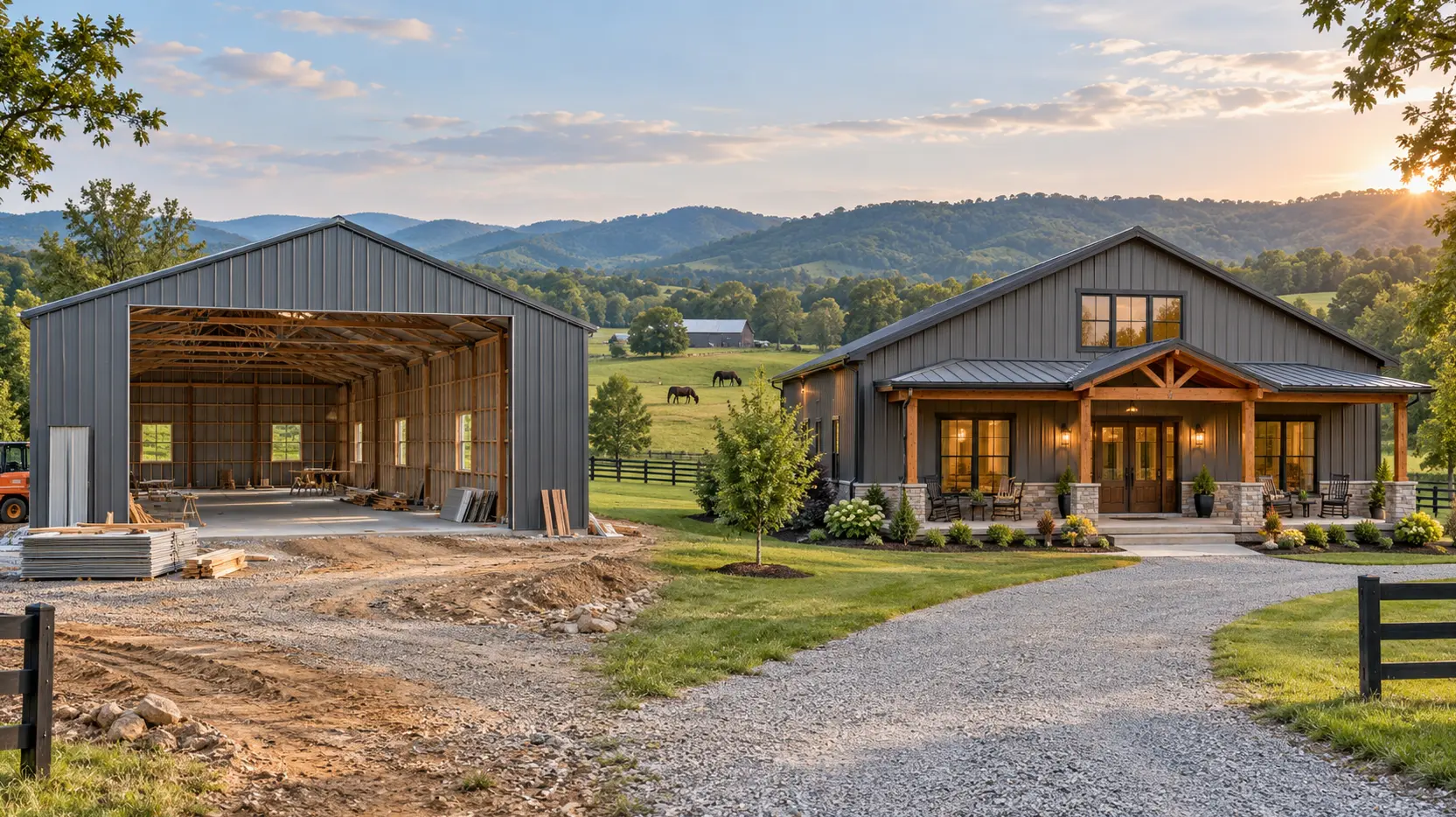
Two quotes for the same 40×60 building in Tennessee can differ by more than $250,000. The reason is almost never the steel. It is whether the price covers a barndominium shell or a turnkey build. A shell gets you a weather-tight structure standing on your land. A turnkey build gets you a finished home with power, water, heat and a certificate of occupancy. Everything in between, including insulation, wiring, plumbing, HVAC, drywall and finishes, is where the money and the risk sit. This guide explains what each option actually includes in Tennessee, how cost and financing differ, and which path suits which kind of owner.
Shell vs Turnkey: The Two Ways a Tennessee Barndominium Gets Built
Shell and turnkey describe scope of work, not quality of construction. Both can use identical engineering. The difference is where the contract stops and your responsibility starts.
The words are used loosely across the industry. Tennessee barndominium contractors apply them differently from region to region, and some suppliers use “shell” to mean a delivered kit of parts rather than an erected building. Read the inclusion list, not the label.
Here are the terms you will run into, and what they usually mean:
- Kit or package: engineered materials delivered to your site, with no labor included. You or a crew you hire erect it.
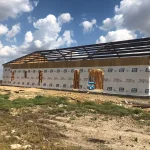
- Shell (dried in): the building erected, roofed and closed to the weather. Nothing on the interior side of the walls.
- Warm shell: a shell plus insulation, and sometimes interior framing. A middle option between the two extremes.
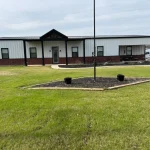
- Turnkey: the complete build. Design, permits, foundation, structure, all trades, finishes and handover of keys.
What a Barndominium Shell Includes in Tennessee
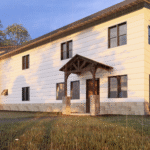
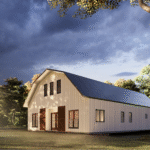
A shell package delivers the structural envelope. Once the crew leaves, you have a secure, dry, empty building that will not deteriorate while you plan the next stage.
A typical Tennessee shell scope covers:
- Engineered slab or pier and frost wall foundation, sized to the soil report
- Primary and secondary structural framing, whether red iron steel or post frame
- Metal roof and wall panels, commonly 26-gauge, with trim
- Exterior doors and windows installed, plus framed openings for overhead doors
What a Shell Leaves Out
The exclusions matter more than the inclusions, because they are the part you will pay for later. Most shell contracts stop before:
- Wall insulation, interior framing, drywall and ceilings
- Electrical service, rough-in wiring, panel and fixtures
- Plumbing rough-in, water heater, fixtures and connections
- HVAC equipment, ductwork and registers
- Flooring, cabinetry, countertops, interior doors and trim
- Well, septic, driveway, final grading and utility connections
Barndominium builders in Tennessee usually price a shell as a fixed package because the variables are limited and the work is predictable. That fixed price is exactly why shell quotes look attractive on paper and why they are so easy to misread as a total build cost.

What a Turnkey Barndominium Build in Tennessee Covers
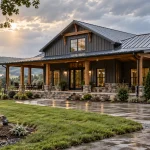
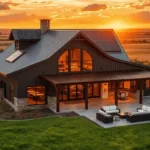
A turnkey build is one contract that ends with a home you can move into. It absorbs every phase of the project, including the phases most owners have never had to schedule before.
A full-service turnkey scope generally includes:
- Design and floor plan development, plus structural engineering stamped for Tennessee wind and snow loads
- Permit applications, inspection scheduling and code compliance
- Site work, pad preparation, foundation and utility trenching
- Structure, roofing, siding, windows and exterior doors
- Spray foam or batt insulation, interior framing, drywall and paint
- Full electrical, plumbing and HVAC systems
- Kitchen and bathroom fit-out, flooring, trim and fixtures
- Final inspections, certificate of occupancy and handover
Turnkey barndominium builders in Tennessee carry the schedule, the trade coordination and the warranty, which is the part owners tend to undervalue until something goes wrong. When one company holds the whole scope, a framing error is that company’s problem to fix rather than an argument between two subcontractors you hired separately.
Shell vs Turnkey Compared Side by Side
The practical differences come down to seven things:
- Scope: a shell is a weather-tight structure. A turnkey build is a finished, occupiable home.
- Who coordinates: with a shell, you become the general contractor by default. With turnkey, the builder does.
- Price certainty: a shell has a firm price for a small slice of the project. Turnkey has a firm price for the whole thing.
- Financing: lenders fund completed homes readily. A shell with no certificate of occupancy is much harder to mortgage.
- Timeline: a shell goes up in weeks. Finishing it can take months or years depending on your budget and availability.
- Warranty: a shell contract covers the structure only. Nobody warranties the work you or your subs perform afterwards.
- Risk: shell builds shift schedule risk, trade risk and cost inflation risk onto the owner.
Want to discuss Shell and Turnkey build options in Tennessee?
How the Cost of a Shell and a Turnkey Build Compare in Tennessee
The cost to build a barndominium in Tennessee is driven by finish level far more than by structure. Published industry pricing puts shell-only work in the region of $28 to $58 per square foot, while fully finished turnkey builds commonly land between $110 and $230 per square foot. Across Kentucky and Tennessee, finished living space is often quoted at $160 to $200 per square foot, with shop space and covered porches priced considerably lower.
That gap is not builder margin. It is labor and materials for work that has to happen either way:
- Insulation across the full wall and roof area, which is a significant line item in a humid climate
- Interior framing, drywall, taping and paint across every room
- Three separate trade packages for electrical, plumbing and mechanical
- Cabinetry, countertops, flooring, tile and fixtures
- Utility connections, driveway, final grading and landscaping
Regional differences matter. Trade rates, hauling distances and land costs are not uniform statewide, so a build outside Memphis in West Tennessee will not price identically to one on a mountain parcel near Gatlinburg. Any per-square-foot figure is a starting point, not a quote.
If you’re planning to get a finance, see our guide on financing a barndo in Tennessee.
Financing a Shell vs a Turnkey Build in Tennessee
Financing is where the shell route surprises people most. Conventional mortgage products are written around finished dwellings with a certificate of occupancy, working HVAC, plumbing and electrical. A shell has none of those, so most national lenders cannot classify it as a residence at all.
The practical financing picture looks like this:
- Most barndominiums are funded with a construction-to-permanent loan that converts to a mortgage at completion
- Lenders release funds in draws tied to construction milestones, which requires a credible line-item budget
- Local banks, credit unions and Farm Credit lenders are usually more comfortable than large national banks
- Appraisal is the common obstacle, because comparable barndominium sales can be scarce in rural counties
- Many lenders restrict or refuse owner-builder arrangements, which is precisely what a shell purchase creates
A turnkey contract from a licensed builder, with a detailed cost breakdown and a defined completion date, is easier for an underwriter to approve, and it produces the certificate of occupancy that unlocks the permanent loan.

Permits, Inspections and Certificates of Occupancy in Tennessee
Tennessee handles residential code enforcement in three different ways depending on where your land sits, and this catches out-of-state buyers constantly. The State Fire Marshal’s Office runs the State Residential Building Code Enforcement Program for one- and two-family dwellings, but it only applies where the local government has not taken enforcement on itself and has not opted out entirely.
The three scenarios are:
- State-enforced counties: you buy a state residential permit and the State Fire Marshal’s Office inspects the build and issues the certificate of occupancy
- Locally enforced jurisdictions: the city or county has adopted and enforces the International Residential Code itself, and issues its own permits and CO
- Opt-out or non-code jurisdictions: the county has voted to exempt itself from statewide standards, though owners can still request state inspection voluntarily to obtain a CO
Tennessee permits and inspections follow the same code path regardless of who finishes the interior, which is the point most shell buyers miss. Choosing a shell does not remove the inspection sequence. It means you are the one booking rough-ins, chasing corrections and holding the file open.
How Tennessee Land Affects Both Paths
Site conditions do not care which contract you signed. They set the foundation design, the septic system and often the building position, and it is worth understanding how Tennessee land affects a barndo build before either quote is written.
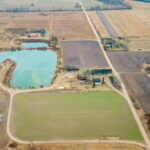
Tennessee soils vary sharply across the state. Expansive clay moves seasonally and demands a thicker footing design. Shallow limestone can mean rock excavation costs that appear nowhere on a shell quote. Slope adds retaining and drainage work that is easy to underestimate from a photograph.
Sites in East Tennessee frequently involve grade changes, rock shelf and access constraints on ridge and valley parcels. That work happens before the first steel column goes up, and on a shell contract it is normally excluded, priced as an allowance, or left entirely to the owner to arrange.
Wastewater is the other gatekeeper. Septic approval guidelines in Tennessee run through the Department of Environment and Conservation’s Division of Water Resources, which evaluates the site and issues a subsurface sewage disposal system permit before the property can be occupied. Soil depth, absorption rate and available drain field area determine whether you get a conventional system, an alternative system, or a refusal on a parcel that looked perfect.
Want to discuss barndominium building options in Tennessee?
Common Mistakes Tennessee Owners Make With Shell Builds
Shell builds work well for some owners. They go badly for others, and the failure patterns are consistent:
- Comparing a shell price to a turnkey price: the two numbers describe different products and should never sit side by side on a spreadsheet
- Assuming interior work is the cheap part: in most projects the shell represents a minority of the all-in cost
- Skipping the layout stage: plumbing runs, load points and window placement all depend on the interior plan
- Underestimating trade availability: good rural electricians and HVAC crews are booked out, and small finish jobs get scheduled last
- Assuming you can move in early: occupancy without a CO creates insurance, lending and code problems
- Forgetting inflation: a build stretched over three years absorbs three years of material and labor increases
Locking barndominium floor plans in Tennessee before the slab is poured prevents the most expensive category of rework, because plumbing stub-ups and load-bearing points are cast in concrete on day one. Changing your bathroom position after the shell is standing means cutting a slab that was never designed to be cut.
Which Option Fits Your Build?
The honest answer depends on your trade experience, your financing and how much project management you want to own.
A shell tends to suit owners who:
- Work in the trades themselves, or have reliable relationships with local subcontractors
- Are paying cash and are comfortable finishing in stages over time
- Want a shop, hangar or agricultural building first, with living space added later
A turnkey build tends to suit owners who:
- Need a mortgage and therefore need a certificate of occupancy at a defined date
- Have full-time jobs and no capacity to manage six trade schedules
- Want one contract, one price and one point of accountability
- Are building in a county where code enforcement is active and inspections are sequenced
Geography plays a part as well. Barndominium builders in Middle Tennessee deal with limestone shelf, rolling terrain and fast-growing counties with active permit offices, so the coordination burden on a self-managed build is heavier there than many owners expect.

How to Compare a Shell Quote and a Turnkey Quote
You cannot compare the two prices directly, but you can compare the documents. Ask both parties the same questions in writing:
- Is site preparation, dirt work and pad building included, or priced as an allowance?
- Who applies for the building permit and who schedules inspections?
- Is the foundation engineered for this specific soil report, or a standard detail?
- What insulation type and R-value is included, and where?
- Are utility connections, well, septic and driveway inside the contract?
- Who holds the warranty on the structure, the roof and the trades?
Reading a shell proposal alongside a complete guide to building a barndominium in Tennessee makes the missing scope obvious. Once the exclusions are listed and priced, the two options usually converge closer than the headline numbers suggest.
Conclusion
Shell and turnkey are not competing products. They are different amounts of the same project. A shell buys you a structure and hands you everything else, including the permits, the trades, the schedule and the financing problem. A turnkey build buys you a finished home with one contract and one accountable party. The right choice depends on whether you have the trade access, the cash flow and the time to finish what a shell leaves behind. Price the full scope both ways before deciding, because the cheaper quote is rarely the cheaper house.
Frequently Asked Question
Is a barndominium shell cheaper than a turnkey build in Tennessee?
The shell price is lower, but it is not the whole house. Shell work typically represents a minority of the all-in project cost, with insulation, trades and finishes making up the rest. Once you add those separately, the total often lands close to a turnkey figure, sometimes higher if you are buying trade labor in small individual jobs rather than as part of a coordinated schedule.
Can you live in a barndominium shell while you finish it?
Occupying a dwelling generally requires a certificate of occupancy, and a shell without functioning plumbing, electrical and HVAC will not qualify. Some owners do live on site during construction, but it creates insurance, lending and code complications. Confirm the rules with your county or the State Fire Marshal’s Office before assuming it is an option on your parcel.
Can you get a mortgage on a barndominium shell?
Conventional mortgages are written for completed homes, so a shell rarely qualifies. Most people use a construction-to-permanent loan that funds the build in draws and converts to a mortgage once the home is finished and inspected. Local banks, credit unions and Farm Credit lenders are usually more familiar with these projects than large national banks.
How long does a turnkey barndominium take to build in Tennessee?
The structure itself goes up quickly, often in a matter of weeks once the foundation has cured. The interior finish phase is the long part of the schedule, and it is also where weather delays, inspection sequencing and material lead times bite. A shell build stretches that finishing phase out further, because you are fitting trades around their other commitments.
Can you start with a shell and hire a builder to finish it later?
Yes, though it is harder than it sounds. Many builders are reluctant to take over a structure they did not erect, because they inherit responsibility for foundation and framing decisions they cannot verify. If this is your plan, keep every engineering drawing, inspection record and material specification from the shell phase.